
Chefchaouen Tours
A small mountain town in the Rif with a medina painted in shades of blue, best added to a longer trip across the country.
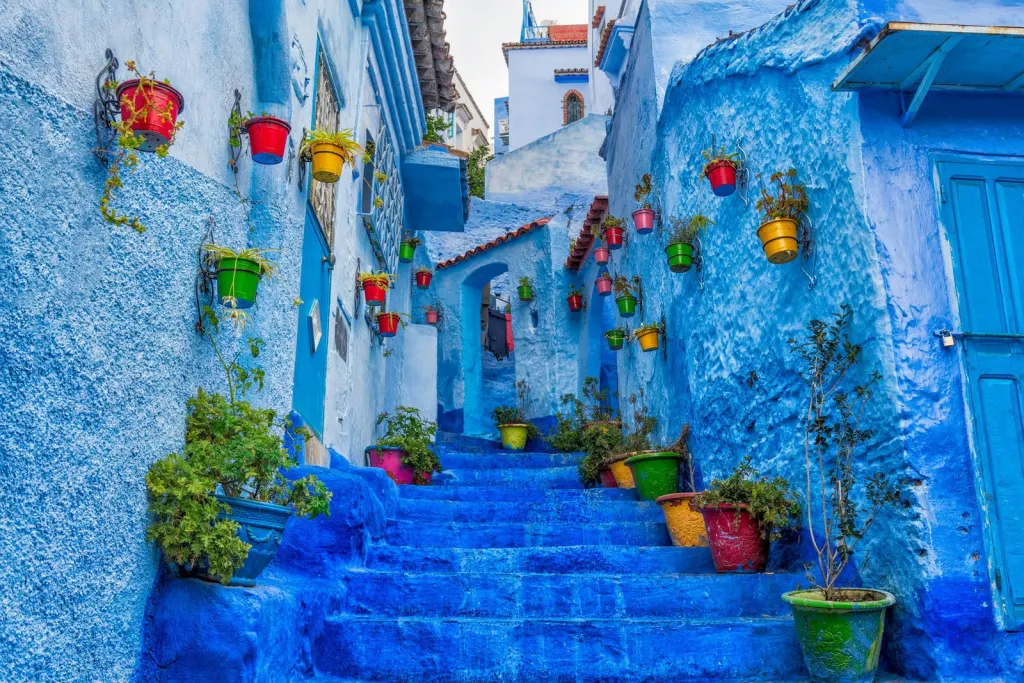
Chefchaouen tours reach a small town in the Rif foothills of north-west Morocco, between Tétouan and Ouazzane, known for a medina whose walls, doors and stairways are painted in shades of blue. It stands at roughly 600 metres and lies far from the desert routes, so it fits best on a longer, cross-country trip. After the long drives of a desert itinerary, the pace slows down.
How it feels
There is no checklist of sights. You walk the alleys and steps, look into shops selling weaving and leather goods, and take in the mountain views. The lanes climb and turn, many of them stepped, so the best way to see the town is slowly and on foot, with time to stop for mint tea.
A short history
The town began in 1471 as a small fortress, the kasbah, built by Ali ibn Rashid al-Alami to defend this part of the country against Portuguese attacks. Muslim families and Jewish families arriving from Andalusia, in what is now Spain, settled here during and after the Reconquista, and their arrival shaped the town you see. The kasbah still stands in the middle of the medina and is now a small museum with a garden.
Why is it blue?
Nobody agrees, and we would rather say so than repeat a tidy legend. One explanation is practical: the blue wash is said to keep mosquitoes away. Another is symbolic, blue standing for the sky and for heaven. Some residents say the walls were painted in the 1970s to attract visitors. None of these is certain, so on a visit we describe what you can see and let the people you meet tell their own version.
What to see
- The medina square, Uta el-Hammam. The central market square, beside the kasbah and the Great Mosque, whose minaret has an octagonal shape.
- The kasbah. The original citadel, now a museum with a garden.
- Ras el-Maa. The spring on the eastern edge of the medina, the town’s original source of water.
- The Spanish Mosque. A disused mosque built by the Spanish in the 1920s on a hill above the town; people walk up for the view over the medina.
When to go and what to bring
The Rif is greener and cooler than the south, with a Mediterranean climate and rain mostly in the cooler months. Spring and autumn are comfortable for walking; in summer the days are warm. Bring shoes with grip for the steps, a layer for the evening and a rain jacket outside summer. If your dates matter, ask us what to expect.
How long to stay
A day is enough for the medina. A night gives you the evening and the morning in the lanes as well as the middle of the day.
On our routes
The 11 day and 15 day Grand Morocco tours include it, the 15 day one with a whole day here. On the 15 day route it follows Fes, Meknes and Volubilis, and the route finishes in Casablanca. To add a night to a shorter route, use Customized Trips.
Tours
Chefchaouen Tours: itineraries that stop here
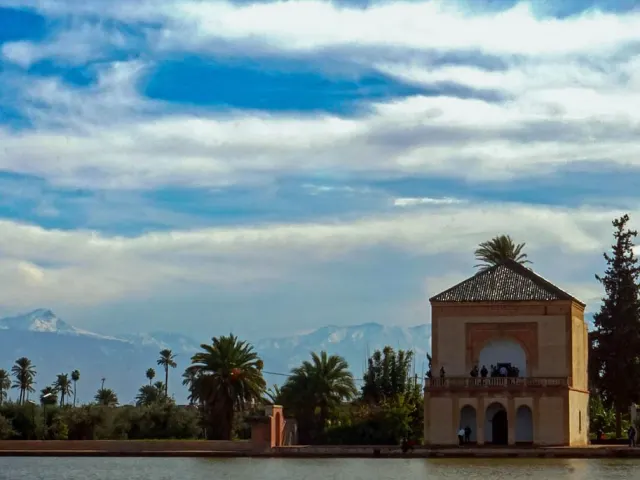
11 Day Grand Morocco Tour
Eleven days from Marrakech to Casablanca by private vehicle, with Essaouira, one night in a Berber desert camp at Erg Chebbi, Fes and Chefchaouen.
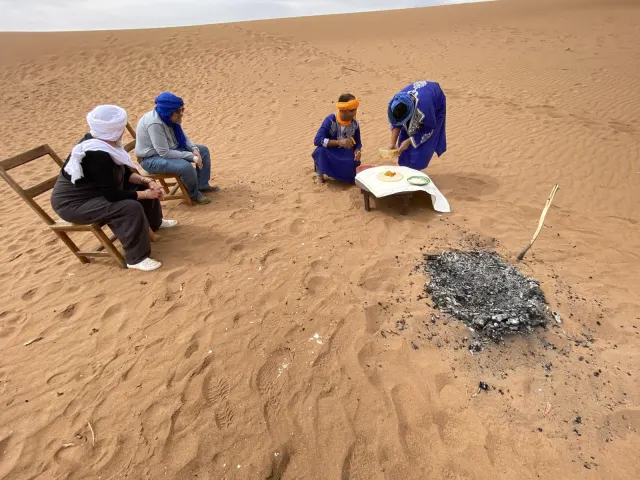
15 Day Grand Morocco Tour
A fortnight with one private driver-guide, from Marrakech to Casablanca: the coast, two separate desert stays, Fes, the Rif mountains and the Roman ruins at Volubilis.