Mount Toubkal trekking: 2, 3, 4 and 5 day guided treks
Guided treks to the summit of Mount Toubkal, 4,167 m, from Imlil: seven routes from two to five days. How they differ, who they suit and what to know about fitness, altitude, season and gear.
Mount Toubkal, at 4,167 m, is the highest peak in North Africa. The trails to it start at Imlil (1,740 m), in the High Atlas, about an hour and a half by car from Marrakech. All our Toubkal treks are guided and a mule carries your luggage. The Toubkal Refuge, at 3,207 m, is the base for summit day (on the 2 day trek you may sleep at a base camp instead). What changes between them is how long you take to get there.
Seven routes
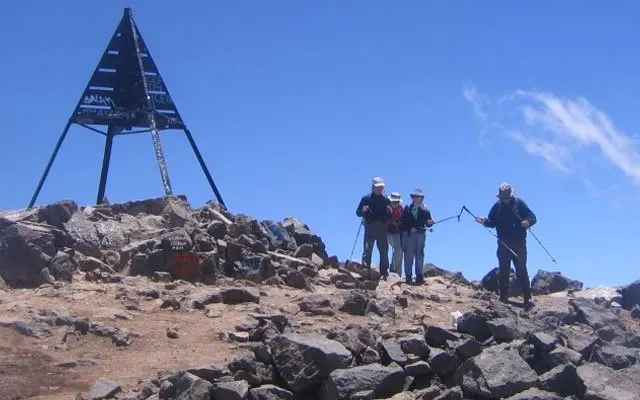
2 Day Toubkal Trek from Imlil
From €150 per person
The shortest way up North Africa's highest peak: a night in the mountains at about 3,200 m, the 4,167 m summit on day two and the…
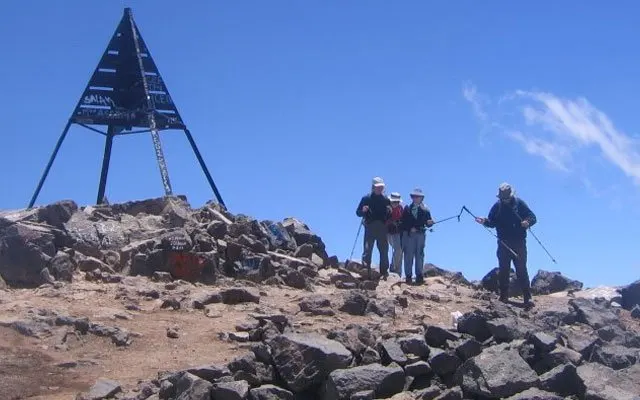
3 Day Toubkal Trek from Imlil
The direct guided ascent: Imlil to the refuge on day 1, the 4,167 m summit on day 2, and the return on day 3.
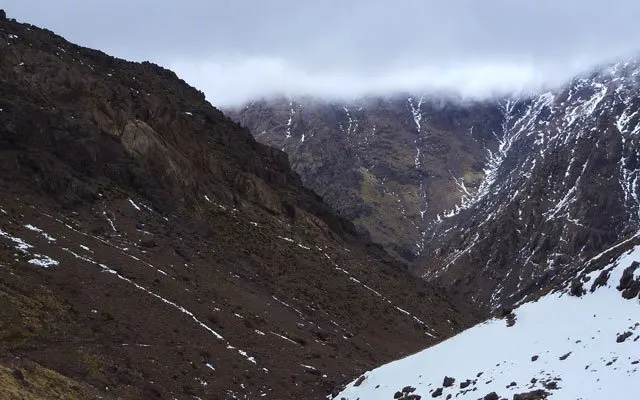
3 Day Toubkal Trek with an Acclimatisation Day
From €195 per person
Three days to the summit with a built-in warm-up: a hike over Isk (2,700 m) to a guest house in Aroumd, a night at the Toubkal…
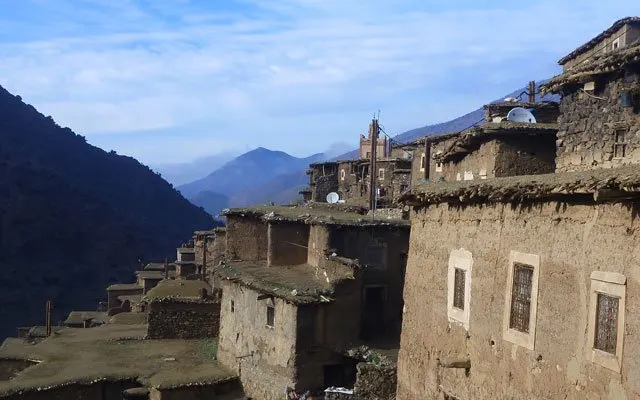
4 Day Toubkal Trek from Imlil
A slower approach to Toubkal: over the Tizi Mzik pass into the quiet Azzaden Valley, a night in a gite, the refuge on day 2 and…
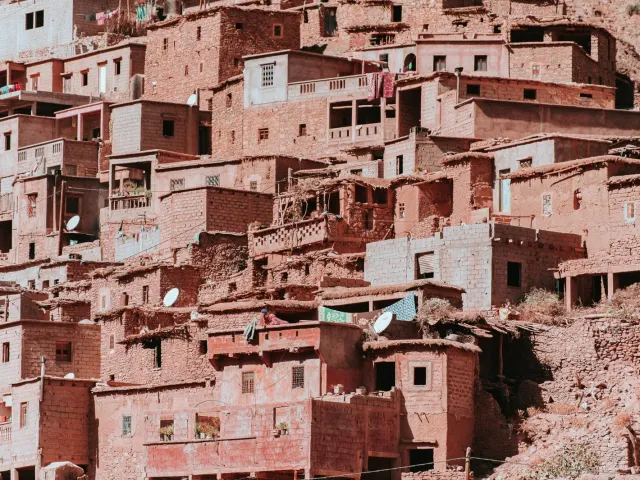
4 Day Berber Villages and Toubkal Trek from Imlil
From €300 per person
Four days in the High Atlas: a high pass at 3,600 m, a night at the Toubkal refuge, the 4,167 m summit, then a night and…
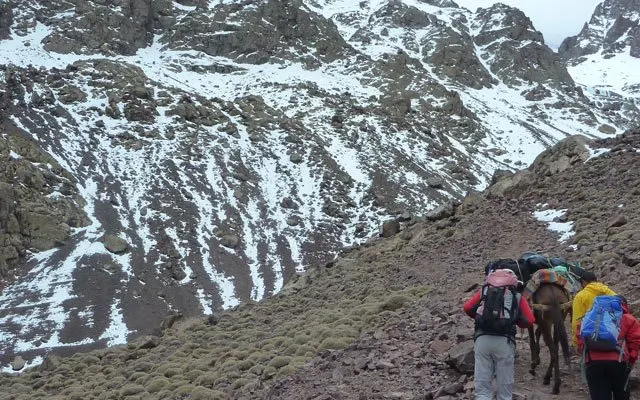
5 Day Toubkal Trek from Imlil
From €590 per person
A circuit rather than a straight climb: the Azzaden Valley, the Tazaghart plateau and Lake Ifni, then the refuge and a guided summit on day 4.
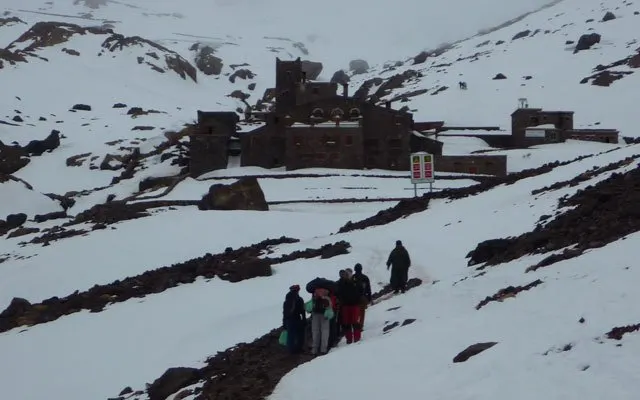
5 Day Toubkal Trek with an Acclimatisation Day
From €480 per person
A gentler way up Toubkal: two nights in an Aroumd guest house with a day to acclimatise, two nights at the refuge, the 4,167 m summit…
| Trek | Route | Nights | Summit day |
|---|---|---|---|
| 2 day | Imlil to the refuge area on day 1, the summit and the descent on day 2 | 1 at the refuge or a base camp | Day 2 |
| 3 day | Up the Mizane Valley, past Berber villages, to the refuge | 2 at the refuge | Day 2 |
| 3 day (acclimatisation) | A warm-up hike over Isk and a guest house in Aroumd, then the refuge and a summit-and-descent day | Aroumd guest house, then the refuge | Day 3 |
| 4 day | Over the Tizi Mzik pass into the Azzaden Valley, then to the refuge | 1 in a gite, 1 at the refuge | Day 3 |
| 4 day (villages) | Tizi Mzik, Azib Tamsoult and Tizi Agelzim, then the refuge, the summit and a walk out through Berber villages | Azib Tamsoult, the refuge and Aroumd, with a hammam | Day 3 |
| 5 day | Azzaden Valley, Tazaghart plateau and Lake Ifni, then the refuge | 1 in a gite, 1 near Lake Ifni, 1 at the refuge | Day 4 |
| 5 day (acclimatisation) | Two nights in an Aroumd guest house with an acclimatisation walk to Tizi Mzik, then two nights at the refuge | 2 in Aroumd, 2 at the refuge | Day 4 |
Which one to choose
The 2 day trek is the fastest and the hardest: it gives you the least time to adapt to altitude, so choose it only if you are fit and short of time. The 3 day trek is the most direct of the longer routes and gains height fast. The 4 day trek spreads the climb and passes remote villages. The two acclimatisation treks, of 3 and 5 days, sleep low in an Aroumd guest house before going up to the refuge, which suits people who worry about altitude. The 4 day Berber villages trek covers similar ground at first, then adds a night and a hammam in Aroumd and a walk out through the valley villages. The 5 day trek is a circuit with the most scenery and the most time to adjust. If you are unsure, take the longer route.
Fitness and altitude
Plan for long days on foot, with the summit day the longest. Summit day starts early and involves a steep climb at altitude, then a descent. Altitude can cause headaches, nausea or poor sleep regardless of fitness; go slowly, drink water and tell your guide how you feel. Your guide decides if it is safe to continue, and no route can promise the summit.
Season and conditions
Snow and ice can lie on the high trails from late autumn to spring. In those months you may need crampons and an ice axe, and the weather can change fast at any time of year. Our Atlas Mountains guide gives the background, and Imlil and Toubkal describes the base.
What to bring
- Ankle-supporting walking boots, already worn in.
- Warm layers, a waterproof, a hat and gloves.
- Sun protection and a water bottle.
- A small day pack; the mule takes the rest.
- Travel insurance that covers trekking at altitude (check your policy).
Book
Send your dates and group size through the quote form, or compare other routes in Morocco tour packages.
Frequently asked questions
Can I climb Toubkal in two days?
Yes. Our 2 day trek walks up to the refuge area on day one and does the summit and the descent on day two, about eight to nine hours of walking. It is demanding and gives you little time to adapt to altitude, so a longer trek gives you a better chance of the summit.
Do I need to be very fit to climb Toubkal?
You need good general fitness and the stamina for long walking days, but no climbing skills in summer conditions. Summit day is long and steep, so train by walking uphill with a pack beforehand. The longer treks give you more time to build up.
Is a guide required?
Our treks are guided, with a licensed mountain guide who speaks English and French. The guide decides when conditions allow you to continue.
Can you guarantee the summit?
No. Weather, snow, ice and how you feel on the day decide it, and your guide may turn the group back. Safety comes first.
How do I avoid altitude problems?
Altitude affects people differently, regardless of fitness. Gain height gradually, drink water, walk slowly and tell your guide at once if you feel unwell. The 4 and 5 day treks build in more time to adjust than the 3 day route.
When is the best time to go?
Spring and autumn are the most comfortable. Snow and ice are possible on the high trails from late autumn to spring, when crampons and an ice axe may be needed; ask us about conditions for your dates.
Is luggage carried?
Yes, a mule carries your luggage on all three treks.