2 Day Toubkal Trek from Imlil
- 2 Days / 1 Night
- Private tour
- Imlil and Toubkal
- Atlas Mountains
- Marrakech
Route: Marrakech – Imlil – Sidi Chamarouch – Neltner refuge area – Toubkal summit – Imlil – Marrakech
2 Day Toubkal Trek at a glance
- Summit
- Toubkal, 4,167 m (13,671 ft)
- Day 1
- About 6 hours walking, Imlil (1,745 m) to the refuge at 3,207 m
- Day 2
- About 8–9 hours walking including the summit and descent
- Included
- Guide, cook, all meals, mountain night, mules
- Fitness
- Demanding: long days and fast altitude gain
- Group
- Private, only the people you travel with
- Price
- From €150 per person
Two days is the fastest way to climb Mount Toubkal, and it is also the most demanding. The mountain is 4,167 metres high, the highest in North Africa, and this plan climbs it in one night in the mountains: a long walk up on day one and a very long day two with the summit and the whole descent. It suits fit walkers who are short of time. If you have a fourth or fifth day to spare, a longer trek is kinder to your body and gives you more chance of reaching the top, and we will say so honestly when you ask.
The route in numbers
The route starts at Imlil, a village at about 1,745 metres and about 65 km from Marrakech. On day one you walk up the valley, stop for lunch at the shrine village of Sidi Chamarouch (about 2,350 metres) and carry on up a zigzag path to the Toubkal refuge at 3,207 metres, an ascent of around 1,460 metres in about six hours of walking. Day two starts in the dark so that you can be on the summit at sunrise. The climb takes three to four hours from the refuge, and after the summit you descend the Toubkal valley to Imlil, for about eight to nine hours of walking in the day (longer in winter), so plan for a very full day.
Who this trek suits
You should be comfortable walking six to eight hours on consecutive days with a day pack, on rocky, steep paths and, higher up, loose stones. Previous mountain walking helps, and so does time to get used to altitude, which this route does not give you. Headaches, nausea and unusual tiredness above about 2,500 metres can be early signs of altitude sickness. Tell your guide at once if you feel them: the rule is not to climb higher while symptoms last, and to go down if they get worse.
Our guides and the plan
Our Toubkal guides live in the area and know the paths and the weather patterns of the mountain. The plan is agreed with each client: your guide talks through the route, the pace and the turn-back time with you before you set off and adapts it on the mountain to the group and the conditions. The summit is never guaranteed. Weather, snow, wind, the group’s pace and how everyone feels decide it, and turning back is a normal part of mountain walking, not a failure. Travel insurance is not included, so please arrange cover that includes trekking at altitude.
Seasons, snow and gear
In summer the upper route is a rocky walk. Published mountain guidance puts the snow season from about November to April, when snow and ice can cover the upper slopes, crampons and an ice axe become necessary, and the summit can be well below freezing in wind. Snow cover varies a lot from year to year, so tell us your dates and we will say what to expect and whether a two-day plan is wise or a longer one is better. In any season, bring walking boots that are already broken in, layers, a warm hat and gloves, sun protection, a headlamp for the pre-dawn start and enough water.
Where you sleep
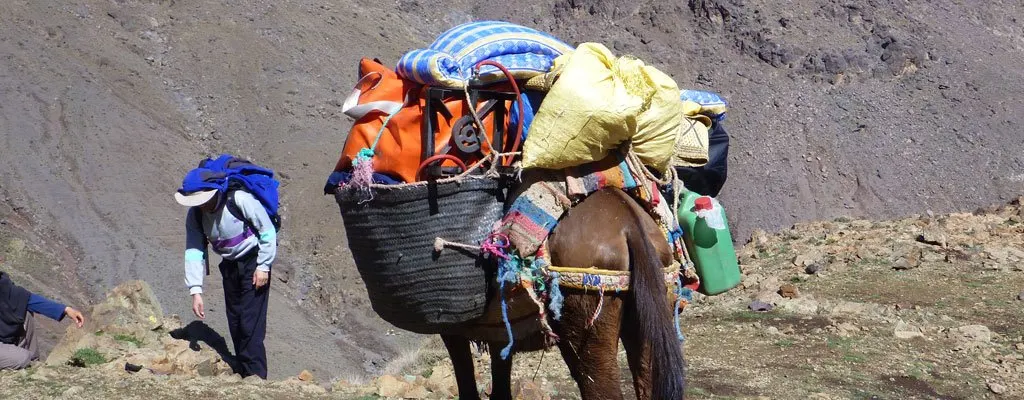
The night is spent in the mountains at about 3,200 metres, in the Toubkal refuge or, if the plan calls for it, at a base camp, and the accommodation is part of the trek. A Berber cook prepares the meals, all of which are included, and mules with muleteers carry your luggage so that you walk with a day pack. Your quote lists exactly what is covered and what is not, so nothing is a surprise on day one.
Other ways up, and other mountain days
The longer treks are 3 days, 4 days and 5 days from Imlil, with more time to adapt to altitude. If you only want to see the valley, our Imlil day trip has no summit and no night out. See everything on the Mount Toubkal trekking page, or ask us to plan your own route.
2 Day Toubkal Trek: day-by-day itinerary
Day 1Imlil to the refuge
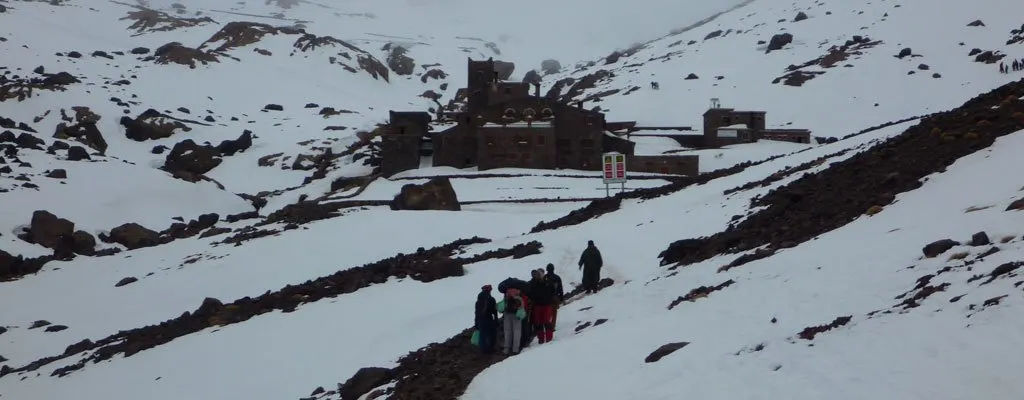
We collect you from your accommodation in Marrakech early in the morning, then it is about an hour and a half to two hours by vehicle to Imlil. You walk up the valley through Berber villages to Sidi Chamarouch, a shrine closed to non-Muslims but in a fine setting on the river, and stop there for lunch (your quote says whether it is included). After the break you climb the zigzag path, passing goat shelters, to the Toubkal refuge at 3,207 metres. Walking time is about six hours. The rest of the day is for resting, eating and an early night.
Day 2Summit and descent
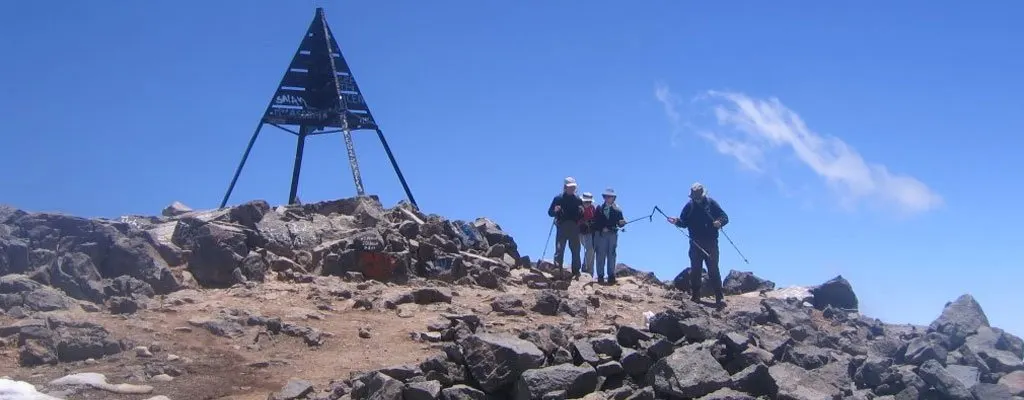
An early start, in the dark, to reach the summit at 4,167 metres for sunrise: three to four hours from the refuge. If the weather and everyone's condition allow, you stand on the top of North Africa, with views over the High Atlas and, on a clear day, toward the Sahara and the Anti-Atlas. Then comes the descent down the Toubkal valley to Imlil, a total walking day of about eight to nine hours, and the drive back to Marrakech.
What is included in the 2 Day Toubkal Trek
Included
- Round-trip transport between your accommodation in Marrakech and the trek at Imlil
- A licensed English-speaking mountain guide who lives in the area and plans the climb with you
- A Berber cook, and all meals during the trek
- Accommodation in the mountains, at the refuge or a base camp
- Mules and muleteers to carry your luggage
Not included
- Travel insurance covering trekking at altitude
- Soft drinks and alcoholic drinks
- Personal trekking equipment and personal expenses, including tips
Questions about the 2 Day Toubkal Trek
Can I climb Toubkal in two days?
Yes, many people do, but it is a hard plan: about six hours of walking on day one and eight to nine on day two, with a quick gain in altitude. A longer trek gives you more time to adapt and a better chance of the summit.
How high is Toubkal?
The summit is at 4,167 metres, the highest point in North Africa. Imlil, where the walk starts, is at about 1,745 metres.
Is the summit guaranteed?
No. Weather, snow, wind, the group's pace and how everyone feels decide it, and your guide may advise turning back. We never guarantee the summit.
Do I need crampons and an ice axe?
In the snow season, which published guidance puts at about November to April, they can be necessary, and conditions vary from year to year. Tell us your dates and we will advise on what you need and whether to go.
Can beginners do the two-day trek?
It is not a beginner plan. You should be comfortable walking six to eight hours on consecutive days with a day pack. If you are unsure, look at the longer treks or start with a walk from Imlil.
What is included?
Round-trip transport between your accommodation in Marrakech and Imlil, an English-speaking guide, a Berber cook and all meals on the trek, accommodation in the mountains, and mules with muleteers for your luggage. Not included: travel insurance, drinks, personal trekking equipment and personal expenses.
What does it cost?
Prices start at €150 per person. The final price depends on the size of your group, your dates and any extras, and we confirm it in writing before you book. Send the form with your dates and the number of climbers and we reply with one clear price and what it covers.
People also ask about 2 day toubkal trek
How long does it take to climb Toubkal?
On our 2 day plan it takes about six hours of walking to reach the refuge on day one, then three to four hours from the refuge to the summit and the descent to Imlil, eight to nine hours of walking in all on day two. Longer routes spread the same climb over three to five days.
How hard is Toubkal to climb?
In the snow-free months the standard route is a long, steep walking path rather than a technical climb. The challenge is altitude, stamina and weather, not rope work. A fast route like this one makes altitude harder, because it gives your body less time to adapt.
How hard is Toubkal in winter?
Much harder. Published mountain guidance puts the snow season at about November to April, when snow and ice can cover the upper slopes, crampons and an ice axe may be needed and the summit can be well below freezing in wind. Tell us your dates and we will advise whether to go and how.
Is Toubkal dangerous?
Like any high mountain it carries real risks: altitude sickness, fast-changing weather, tiredness and, in winter, ice. A guide who knows the mountain, a steady pace, the right clothing and a readiness to turn back reduce those risks, but no operator can remove them or promise the summit.
Is Toubkal the highest mountain in Africa?
No. At 4,167 metres Toubkal is the highest peak in North Africa and in the Atlas range. The highest mountain in Africa is Kilimanjaro, in Tanzania, at 5,895 metres.
Is this a private trek or a group trek?
It is private. When a group reserves, the whole trek is for that group alone: your guide, cook and mule team are with your party only, so the group is the size you book.
Sources and further reading
Photos from the 2 Day Toubkal Trek
Similar tours
3 Day Toubkal Trek from Imlil
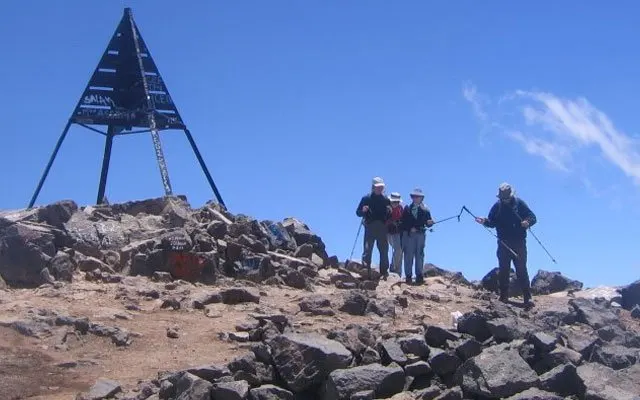
The direct guided ascent: Imlil to the refuge on day 1, the 4,167 m summit on day 2, and the return on day 3.
4 Day Berber Villages and Toubkal Trek from Imlil
From €300 per person
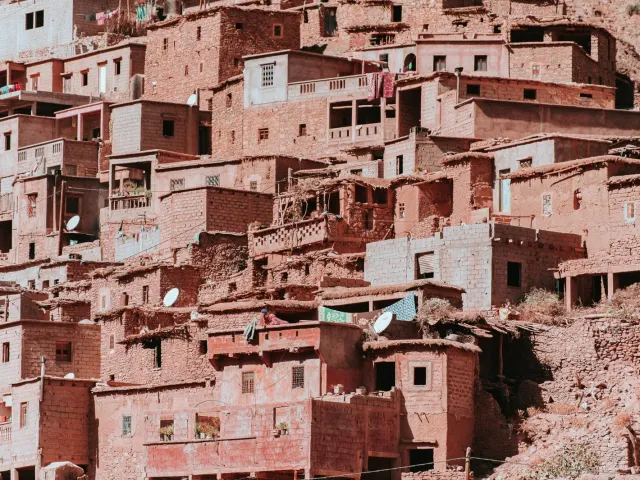
Four days in the High Atlas: a high pass at 3,600 m, a night at the Toubkal refuge, the 4,167 m summit, then a night and…
4 Day Toubkal Trek from Imlil
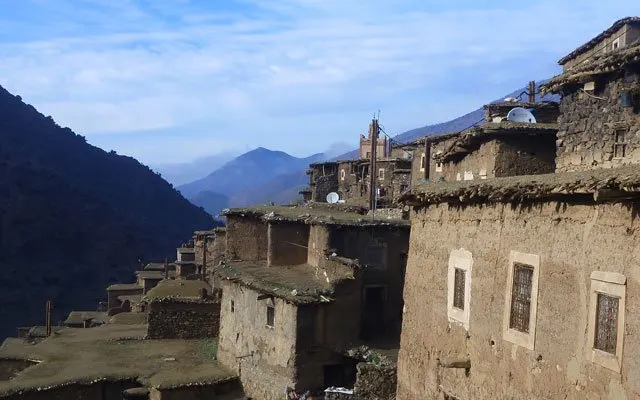
A slower approach to Toubkal: over the Tizi Mzik pass into the quiet Azzaden Valley, a night in a gite, the refuge on day 2 and…