Camel trekking in Morocco: 3 to 9 day treks in Erg Chigaga
Four camel treks from M'Hamid into Erg Chigaga, of 3, 5, 7 and 9 days. Compare what each one adds, how many days you spend in the saddle and where you sleep.
A camel trek is the slow way into the Sahara: you move with the caravan, sleep in camps and see the dunes change with the light. All four of our treks start from M’Hamid, the last town before the open desert in the Draa Valley, and cross Erg Chigaga. They differ in how far they go and how many nights you spend out.
Compare the treks
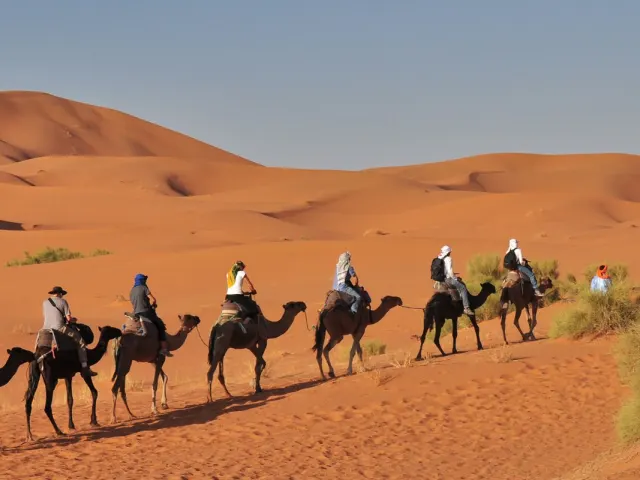
3 Day Camel Trek in Erg Chigaga
The gentlest way into the Sahara by camel: a day's drive to M'Hamid, a first night in the Erg Chigaga dunes with dinner and music, and…
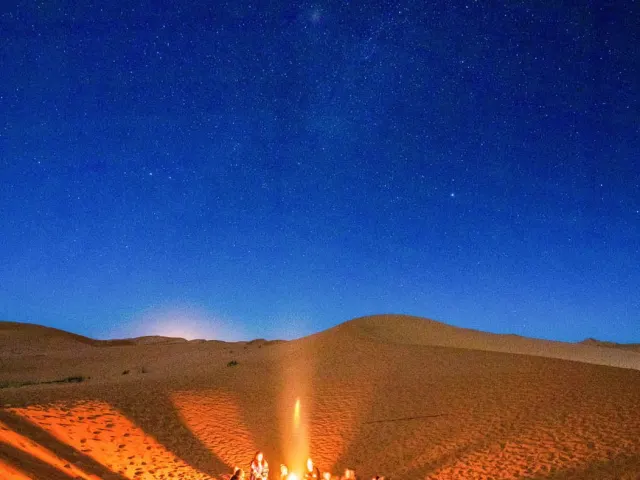
5 Day Camel Trek in Erg Chigaga
A trek built around its middle day: two nights in the dunes, a whole day deeper into Erg Chigaga with nomad stops, and a sunrise ride…
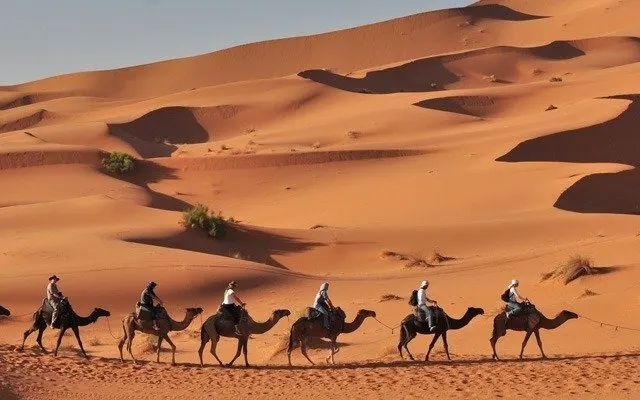
7 Day Camel Trek in Erg Chigaga
A week with a goal: ride from M'Hamid through Erg Chigaga to the dry white bed of Lake Iriqui, then take a different line back through…
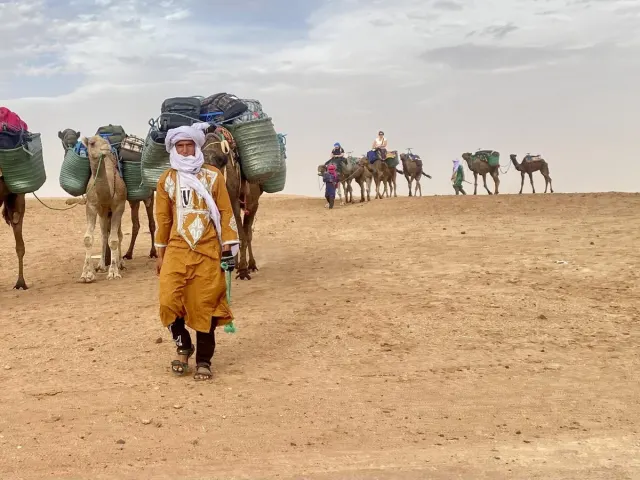
9 Day Camel Trek in Erg Chigaga
The long crossing: seven days on camelback past Erg Chigaga and Lake Iriqui into the southern dune fields, far from any road.
| Trek | Days on camelback | What it adds |
|---|---|---|
| 3 day | Day 2 in, day 3 back | A first night in the dunes with dinner and music |
| 5 day | Days 2, 3 and 4 | A full day deeper in the dune field and nomad encampments |
| 7 day | Days 2 to 6 | The dry salt flats of Lake Iriqui on day 4, and a different way back |
| 9 day | Days 2 to 8 | The southern dune fields and two days of deep desert |
How to choose
- First time on a camel: the 3 day trek.
- You want to feel the distance: the 5 day trek, with a full day in the saddle in the middle.
- You want a destination: the 7 day trek to Lake Iriqui.
- You want remoteness above all: the 9 day trek.
What to wear and bring
Long, loose trousers protect the inside of your legs from the saddle; a scarf shields your face from sun and sand; closed shoes help on sand; and layers matter in winter, when nights are cold. Our guide to a night in the Moroccan Sahara has a fuller list.
Short rides
If you only want a camel ride as part of a desert trip, the 2 day Zagora tour and the Erg Chebbi tours include a sunset ride to camp. See desert tours from Marrakech.
Plan your trek
The best months are explained in our season guide. Send your dates and group size through the quote form.
Frequently asked questions
How long do you ride each day?
Our trek pages describe the days rather than fixed hours. The 3 day trek has one day of riding into the dunes and one back; the 5, 7 and 9 day treks have a day-by-day plan with a camp each night. Ask us how long the riding days are for your dates and group.
Do I need riding experience?
No. A camel trek is more about stamina and comfort than skill, but riding all day is tiring. Choose a shorter trek if you are unsure, and tell us about any back, hip or knee problems.
Where do we sleep?
The first night of every trek is at our own Morocco Desert Camp, where the trek begins. After that you sleep in Berber desert camps, with dinner at the Erg Chigaga camp.
What is the difference between a camel trek and a camel ride?
A trek is a journey over several days with nights in camp. A ride is short. The 2 day Zagora and Erg Chebbi tours include a sunset camel ride to camp, but the trekking itself is what the four treks on this page are about.
What is Lake Iriqui?
A dry lake bed south of Erg Chigaga, flat and white with salt. The 7 day trek reaches it on day 4 and the 9 day trek goes on to the southern dune fields.
How much does a camel trek cost?
We quote each trek for your dates and group size; there is no fixed list price. Use the quote form.