The best time to visit the Morocco desert, season by season
How the Sahara changes through the year, what each season means for nights in a tent, and how to pack for it.
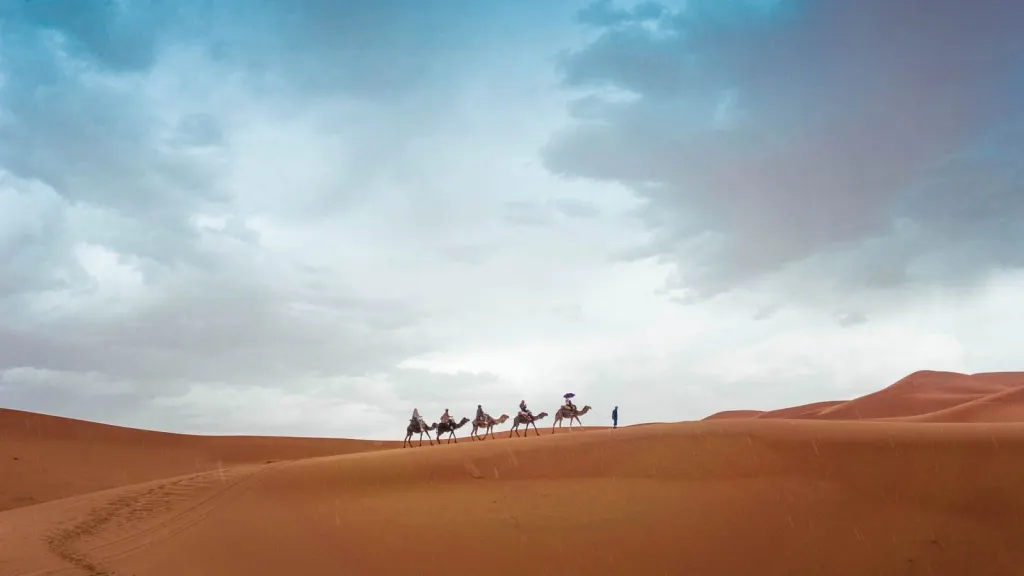
The Sahara can be visited all year, but the experience changes with the season. The main thing to understand is the gap between day and night: dry air loses its heat quickly after sunset, so the same trip can mean light shirts at noon and several layers by the campfire.
Autumn: September to November
Autumn is the season most travellers aim for. The summer heat has gone, days are comfortable and nights are cool rather than cold. It is also busy, so book desert trips for October and November a few weeks ahead.
Winter: December to February
Winter days in the desert are usually mild and sunny, good for oases, kasbahs and camel routes. Nights are the issue. They can fall close to freezing, especially in December and January, so the quality of the blankets at your camp matters. Winter is also when the High Atlas has snow on its peaks, which makes a striking contrast with the dunes if you combine the two, for example on a Toubkal trek and a desert tour.
Spring: March to May
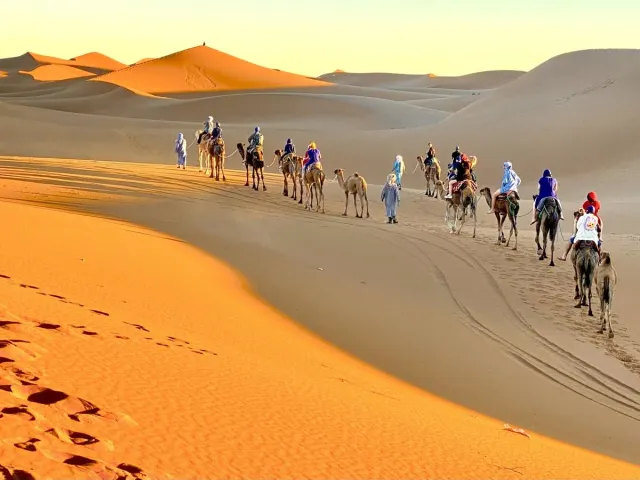
Temperatures climb gradually, flowers bloom in the valleys that lead to the desert, and the light on the dunes is excellent for photographs. Conditions stay comfortable for walking, so spring suits camel treks of several days, such as the 5 day trek or the 7 day trek.
Summer: June to August
Summer brings intense heat, with daytime temperatures often above 40°C. A trip is possible but needs planning: early starts, rest through the hottest hours and plenty of water. If summer is your only option, choose a short itinerary such as the 2 day Zagora tour or a 3 day tour, and expect the sunset and sunrise rides to be the best part of the day.
Our short answer
For most travellers the best balance of temperature and clear skies comes from late September to November and from March to May. Winter works if you pack for the nights; summer works if you accept the heat.
Packing by season
- All year: a scarf for sun and sand, sunglasses, sun protection and enough water.
- Autumn and spring: a warm layer for the evening.
- Winter: a warm jacket and a hat for the night.
- Summer: light, long-sleeved clothing and a hat.
Tell us your dates through the quote form and we will fit the itinerary to the season.